 Trent Pehrson
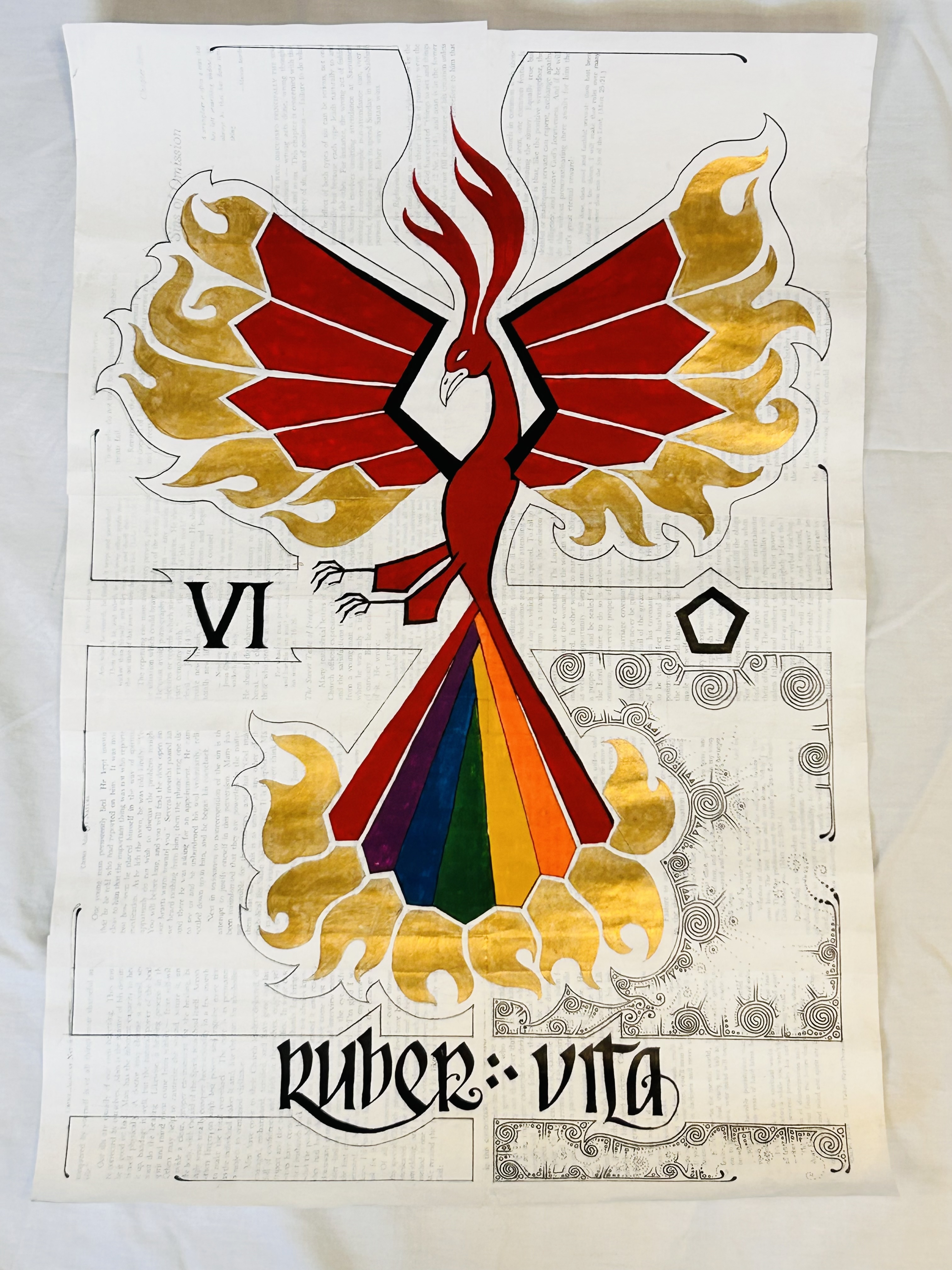
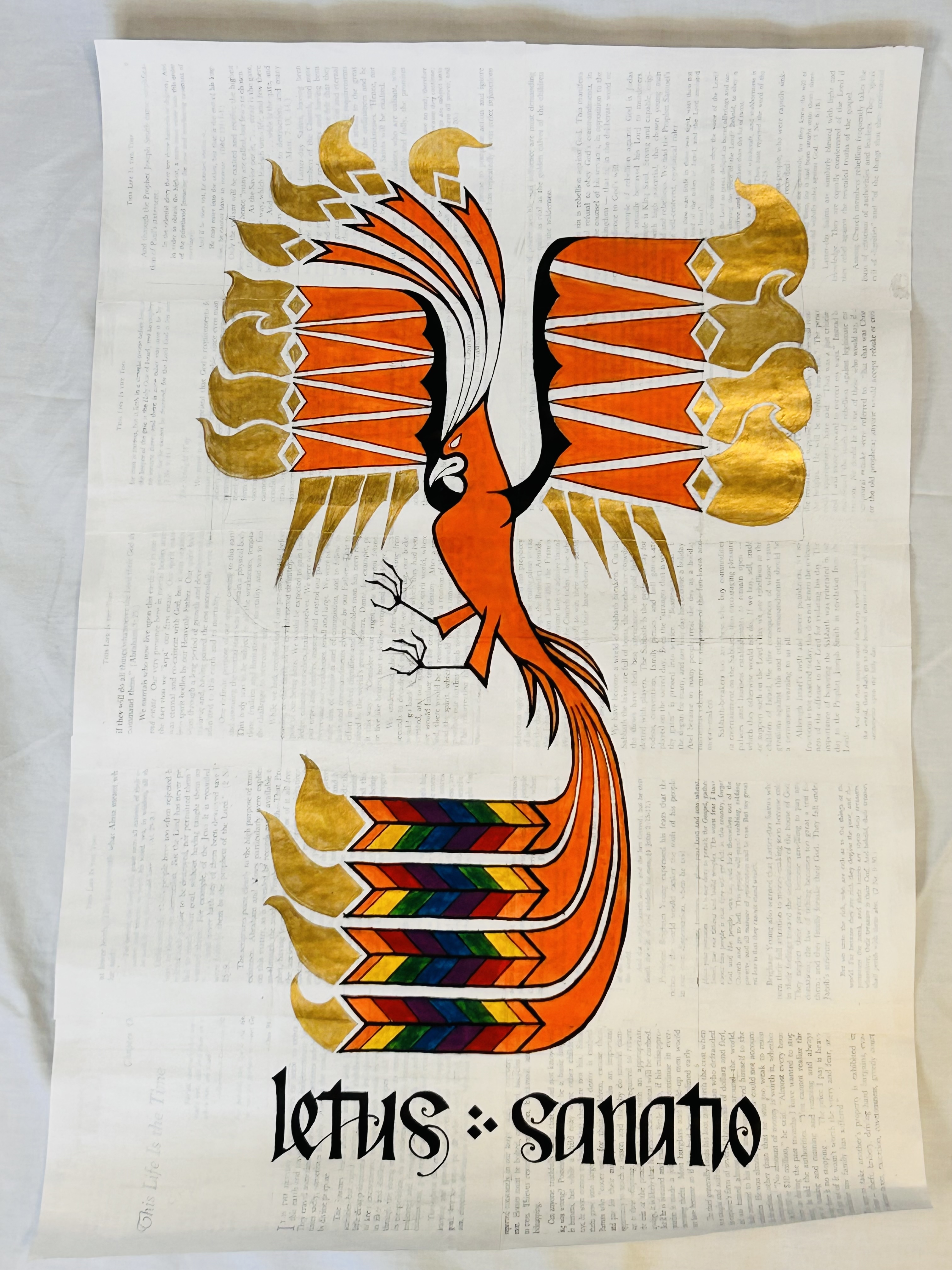
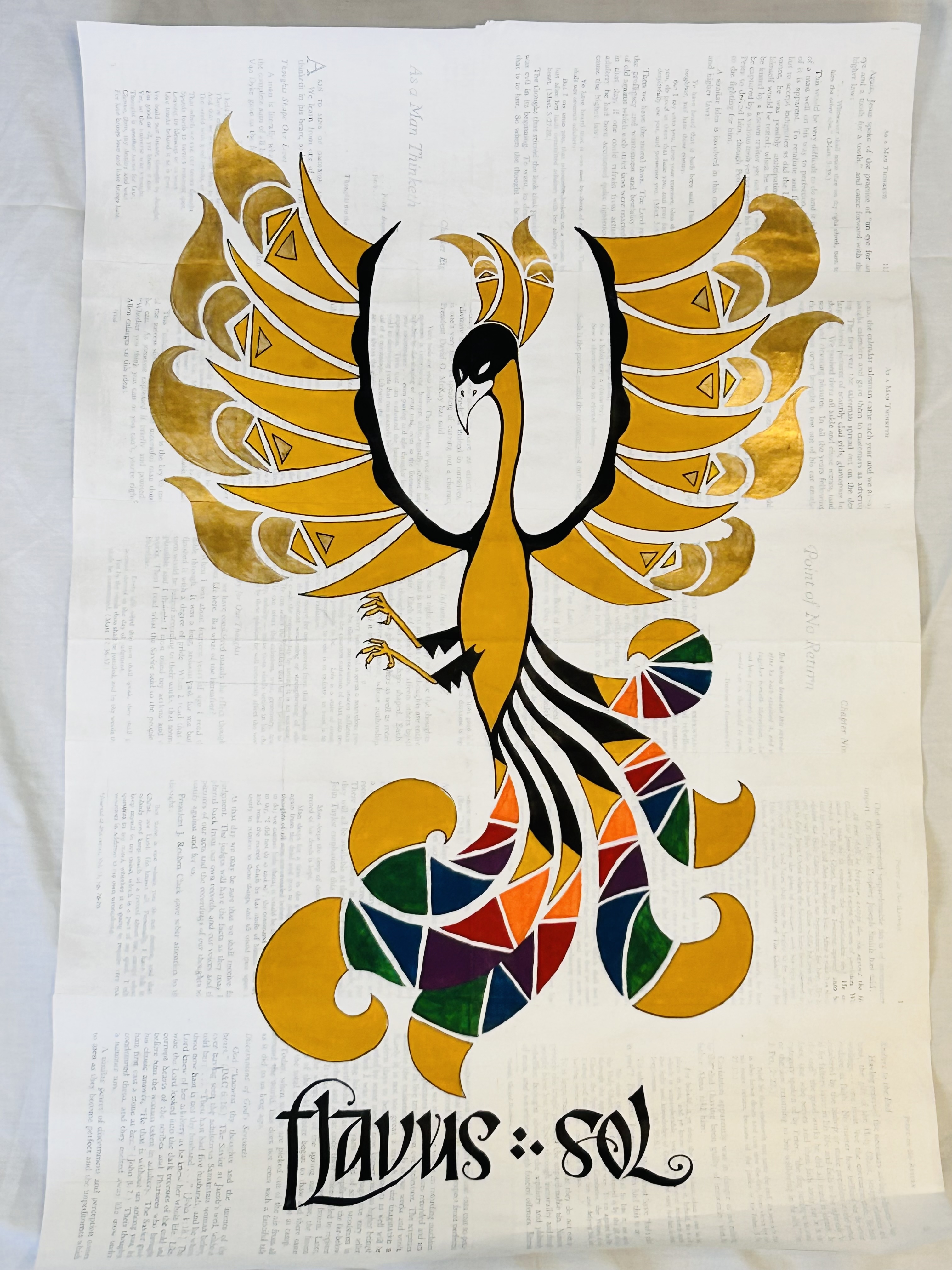
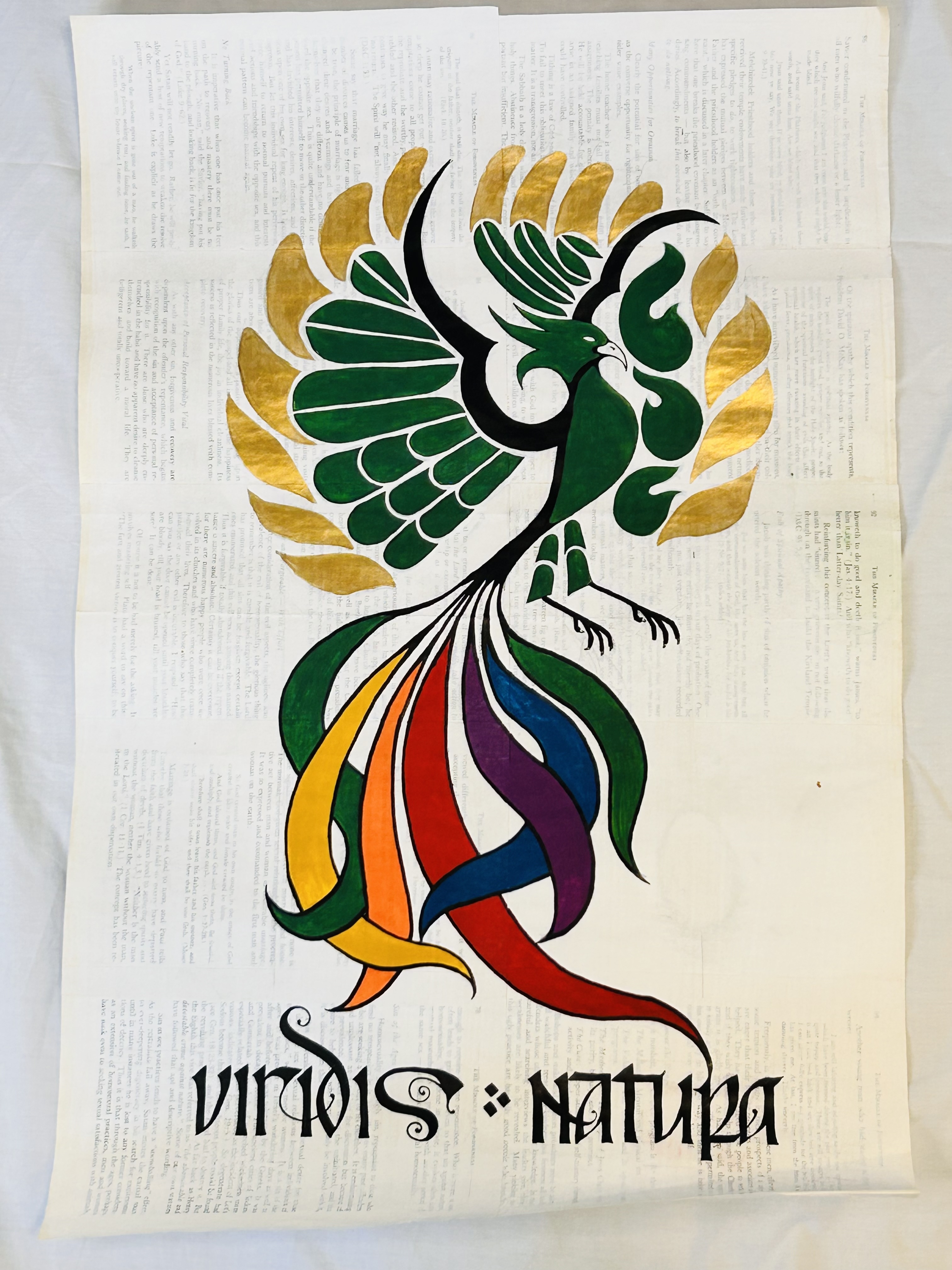
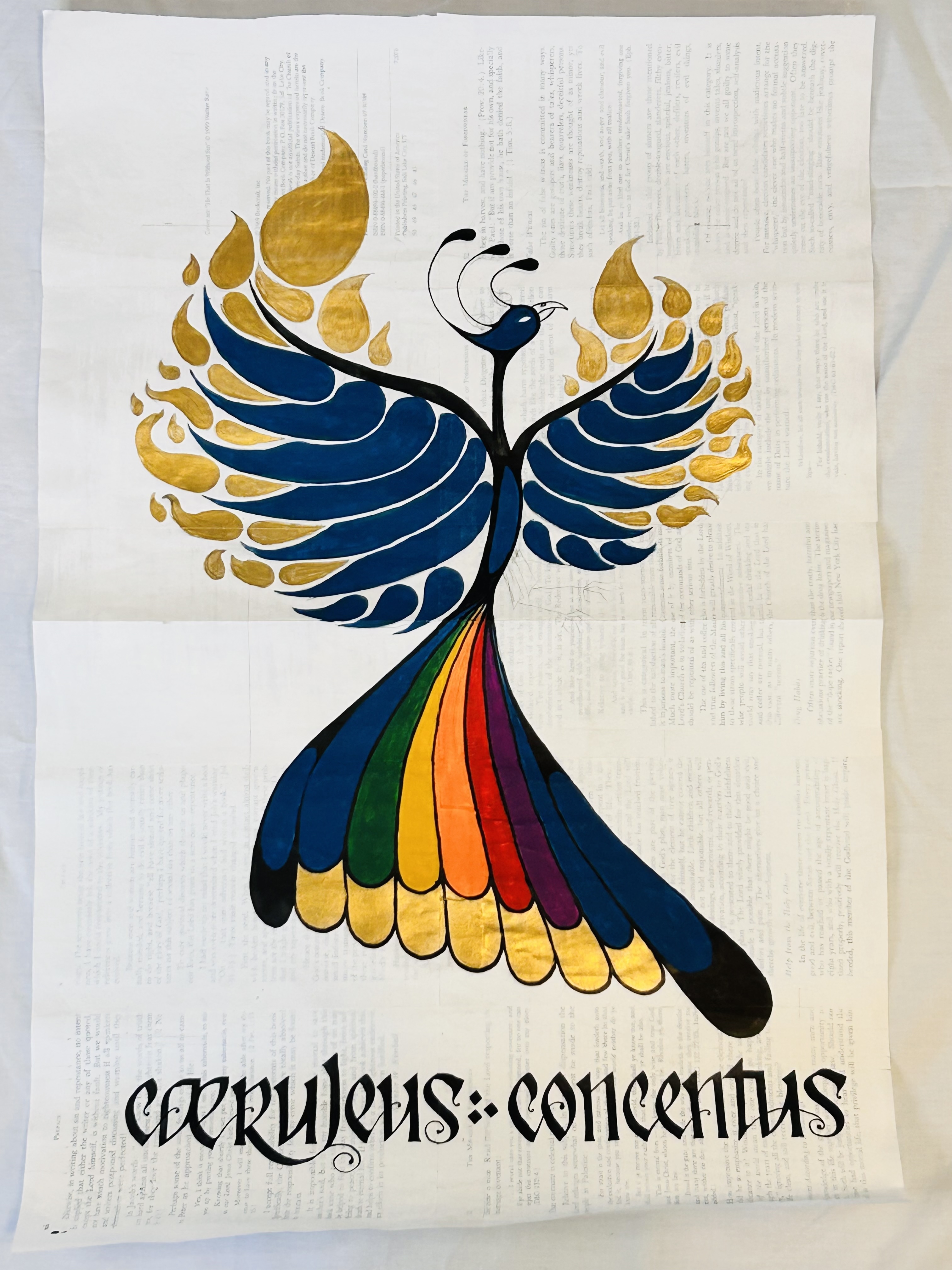
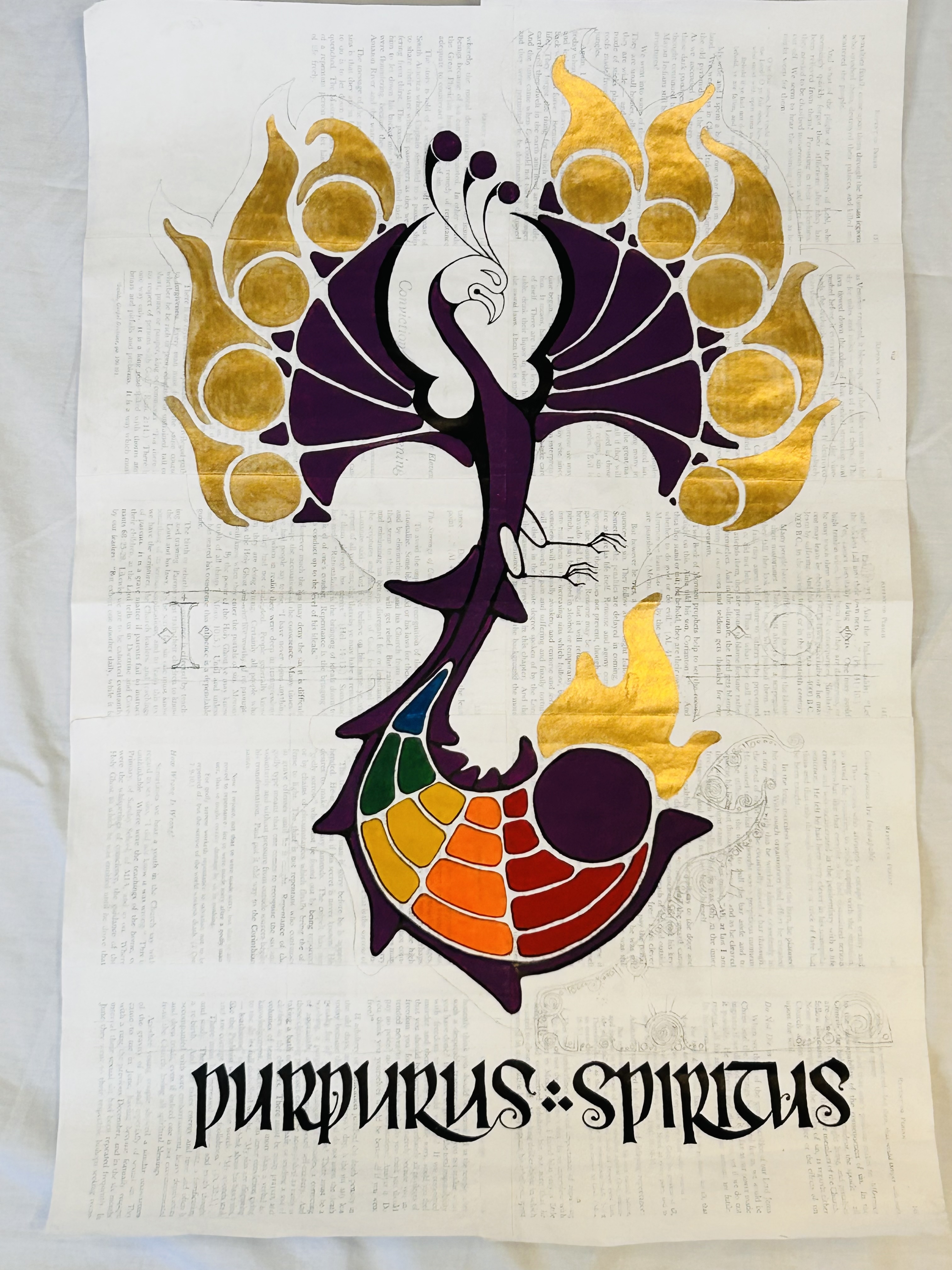
A set of six phoenix paintings in Pride colors
Explore the Exhibit Back About This Exhibit About the Artist
The Phoenix Project is a deeply personal artwork about survival, transformation, and
reclaiming what was once used to cause harm.
Each phoenix in the collection corresponds to one of the six colors of the original Pride
flag and to a particular aspect of life: purple – spirit; blue – harmony; green – nature;
yellow – sunlight; orange – healing; and red – life. Each is also associated with a geometric
form and an order number, reflecting the arrangement of the original flag when its stripes are
displayed vertically.
The works are intended to be installed above or below a vertically hanging Pride flag, allowing
the colors of the phoenixes to follow the order of its stripes.
The paintings are created on a substrate made from conjoined pages of Spencer W. Kimball's book,
The Miracle of Forgiveness. While I understand that Kimball's book is deeply revered within the
Latter-day Saint faith, its teachings caused profound personal harm to me during my youth. I use
the pages of Kimball's work in this way because of the part they played in my own history.
Transforming them into the foundation of these works is an act of healing and reclamation.
Traditionally, the phoenix is a symbol of death, destruction, rebuilding, and rebirth. Here, it
becomes a symbol of something more personal: freeing myself from a form of oppression that attempted
to make me complicit in the extermination of who I am–acknowledging what was stolen through that
oppression and removing myself from complicity in it by not pretending that harm and life theft
never happened.
The pages remain visible beneath the paint because the past is not erased. And while I have banished
the oppression from my life, the oppression has not ended. Thus, the Phoenix Project is, indeed,
a protest–appropriate for a continuing injustice.
The Phoenix Project inspired a similar work (the Kimball Palimpsest), which was given precedence and
completed while this project remains unfinished to date. The original conception called for each
phoenix to bear its corresponding geometric form and number, as seen in the Rvber phoenix, and to
be developed with considerably greater detail. What exists now is therefore both an incomplete body
of work and a record of its own becoming.
The work may be completed on commission for a collector who wishes to acquire it. If you are interested
in commissioning its completion, please visit the Services
page and click on the Request an Art Commission Here → link in the Custom Art
Commissions service section.