 Trent Pehrson
An exploration of calligraphy and manuscript design for children's literature
Explore the Exhibit Home About This Exhibit About the Artist
Calligraphy Study I is an exploratory manuscript project investigating
the possibilities of developing a distinctive calligraphic hand for children's
literature. Drawing upon the visual traditions of handwritten and illuminated
manuscripts, the study considers how lettering, ornament, illustration, and
the physical qualities of a book might work together to create an engaging
environment for storytelling.
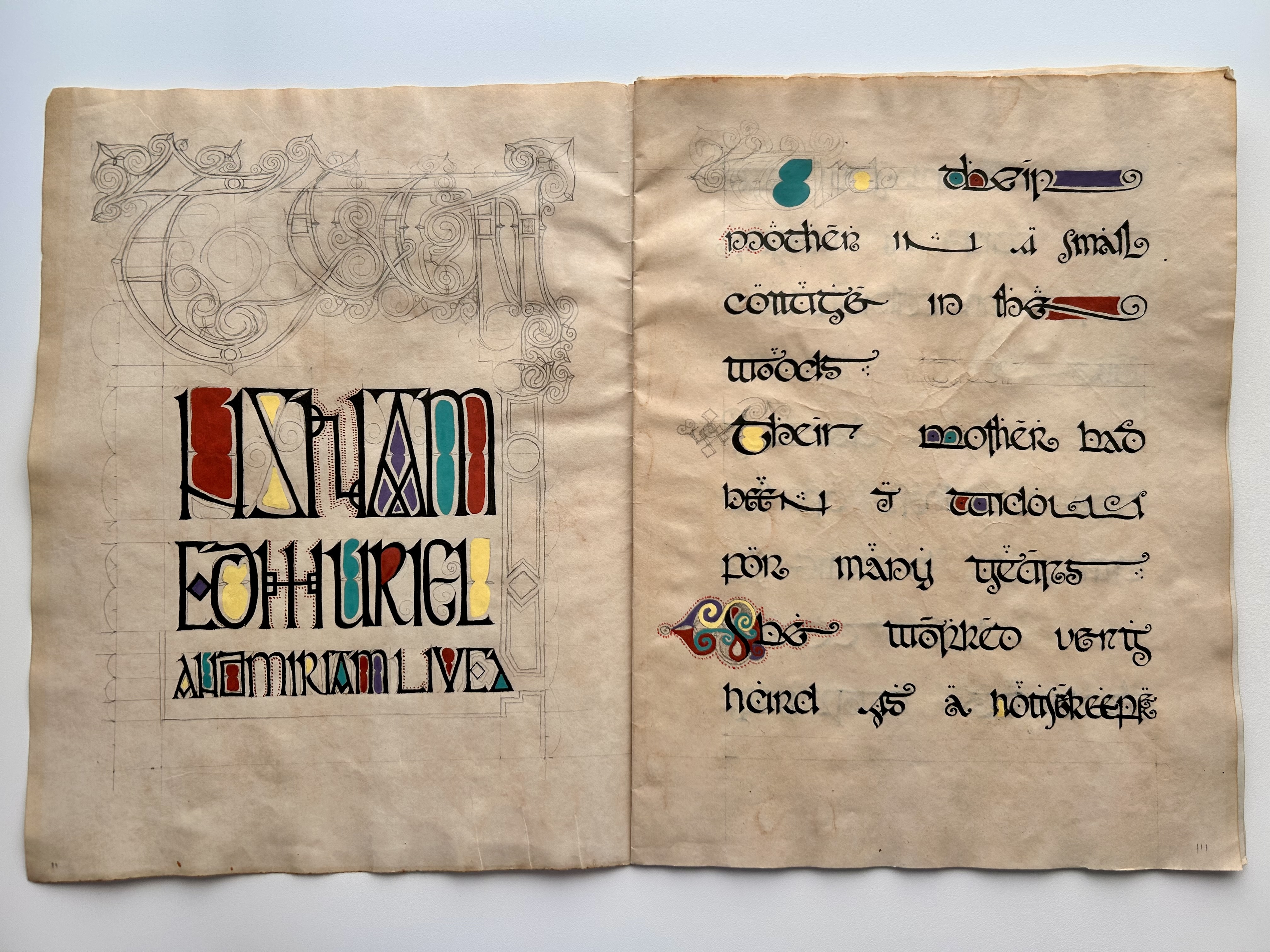
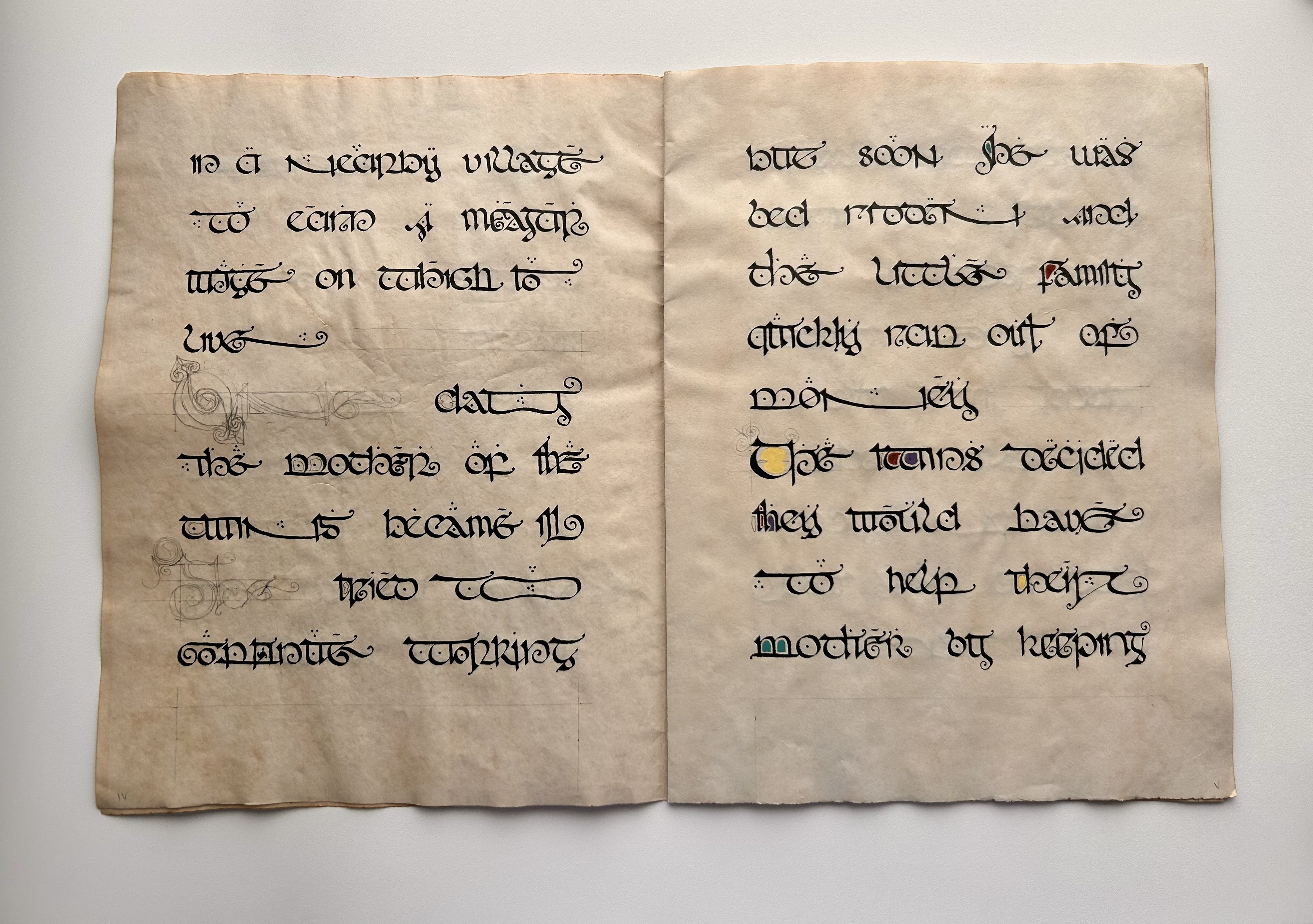
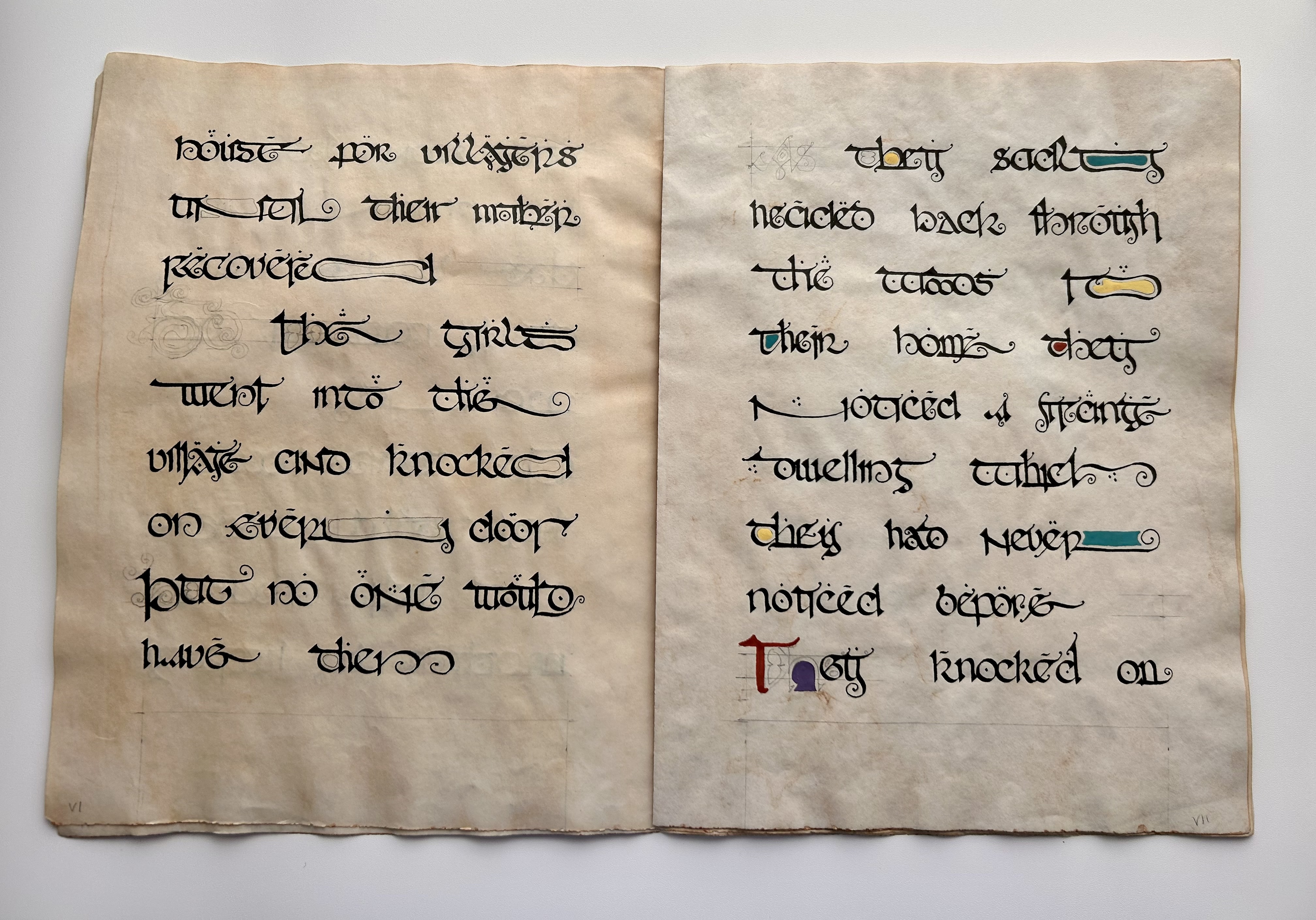
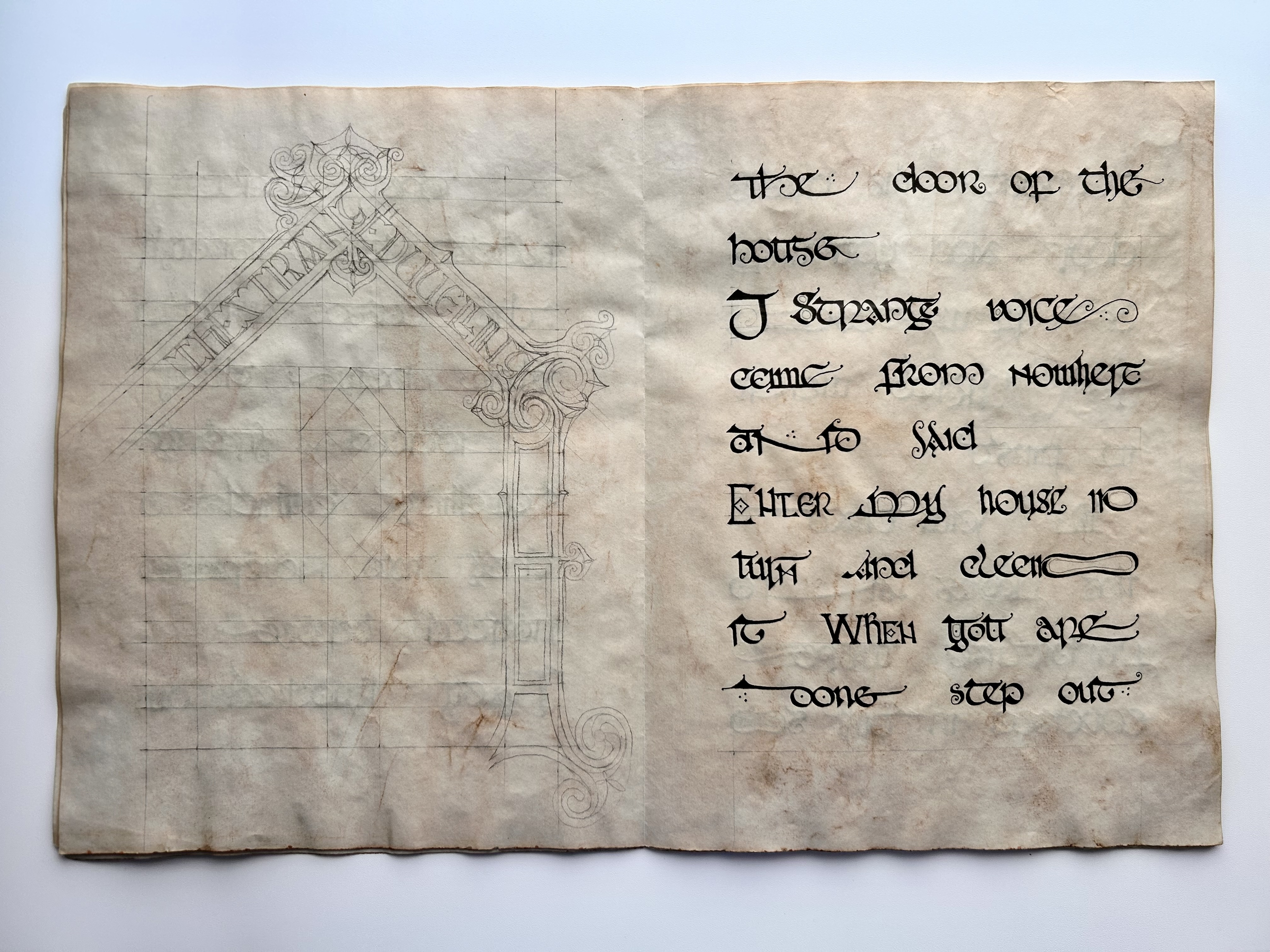
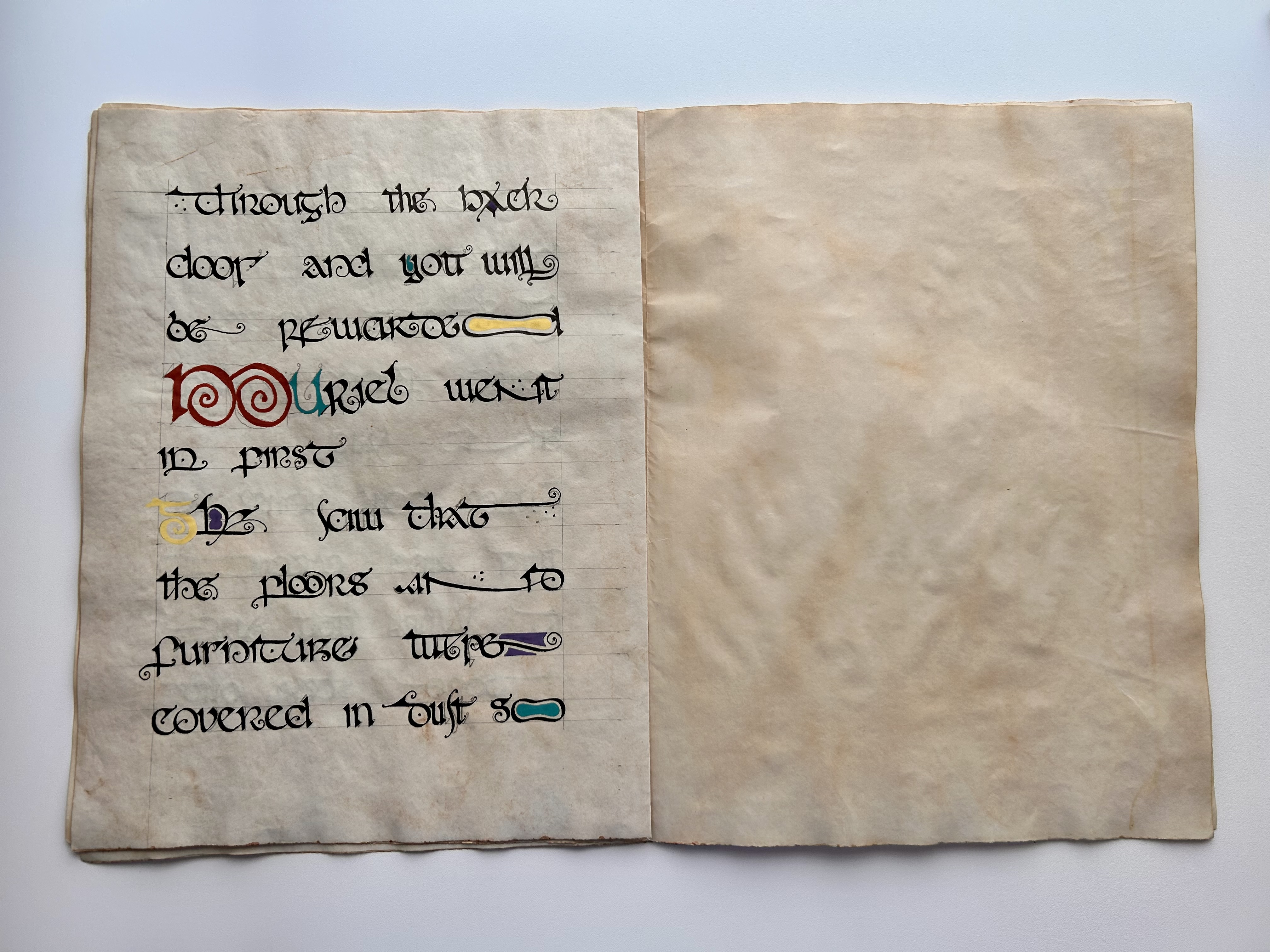
The manuscript employs expressive letterforms that balance readability with
decorative complexity. Elaborated initials, extended strokes, ornamental
flourishes, and occasional accents of color interrupt the regular movement
of the text, giving the writing a visual rhythm beyond its linguistic
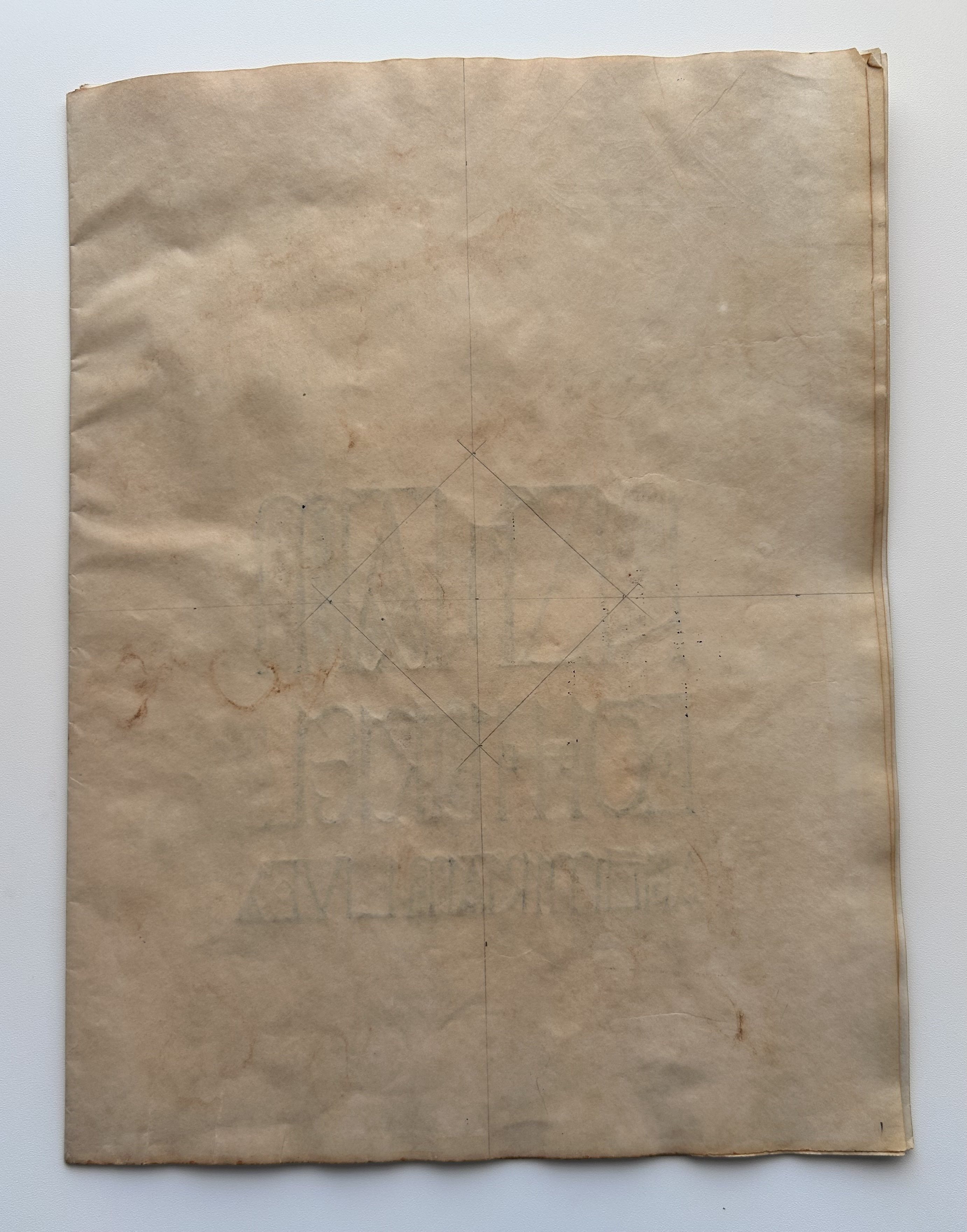
content. The aged-looking paper surfaces further evoke the character of
historical manuscripts, suggesting an artifact with a history and identity
of its own.
The study also explores the relationship between written narrative and
visual illustration. Preliminary sketches and unfinished areas reveal
possibilities for integrating imagery into the manuscript without
subordinating the calligraphy to a purely functional role. Instead,
the writing itself becomes an important part of the visual composition,
occupying a space between language and illustration.
As an experimental work, Calligraphy Study I is concerned less
with producing a finished children's book than with discovering a visual
language through which such a book might be created. It examines how
the familiar act of reading a story can be transformed by the material
and aesthetic qualities of handwritten text, inviting readers to
experience the written word not only as a means of communication
but also as an expressive visual form.